
Investing in Index Funds: Advantages and Disadvantages for the Australian Investor
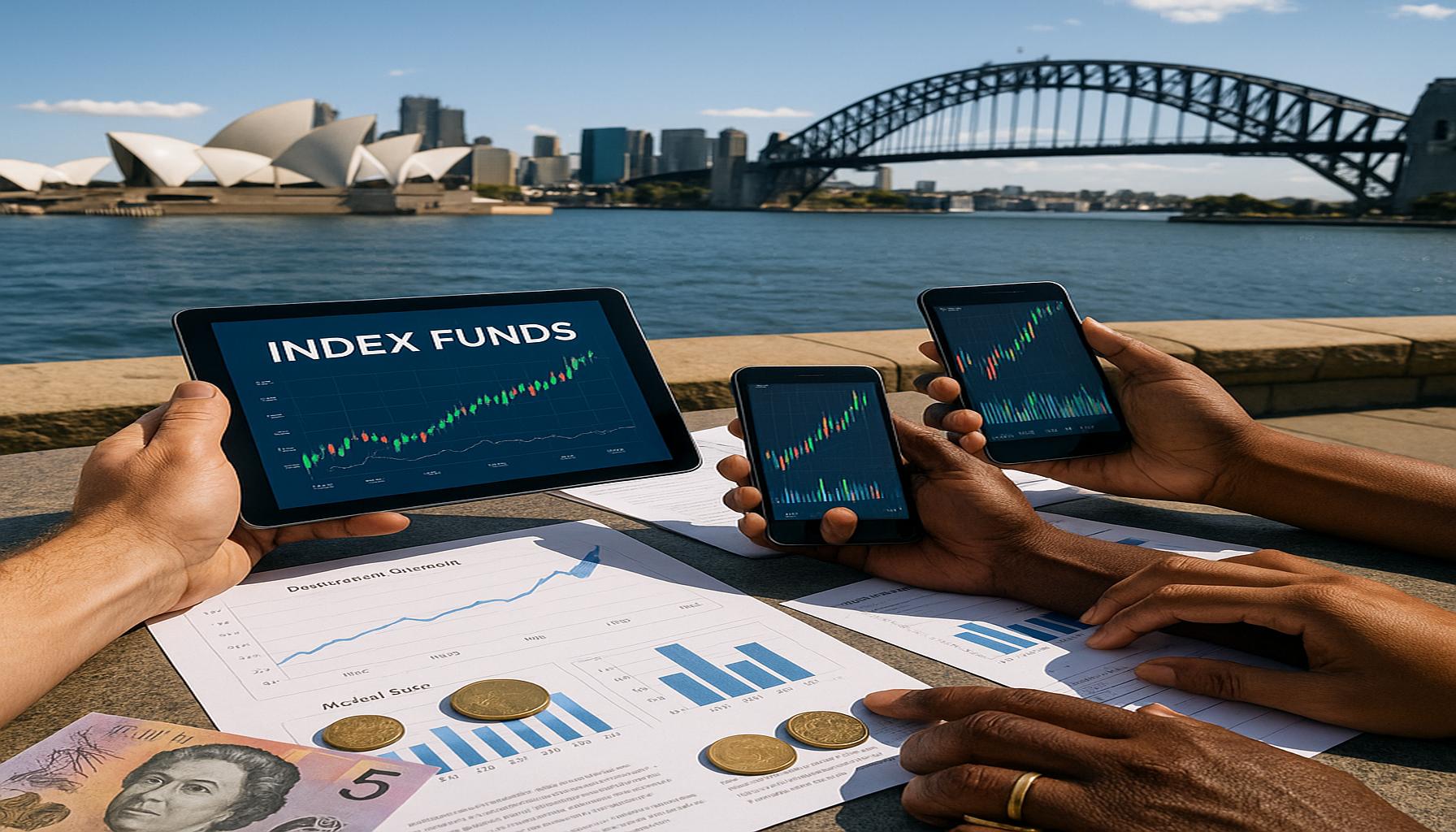
The Path to Wealth through Index Funds
For many Australians, embarking on the investment journey can evoke feelings of uncertainty and apprehension. The financial markets often resemble a complex maze, filled with technical jargon and unpredictable fluctuations. However, index funds have gained recognition as an illuminating guide, offering a straightforward and effective route to wealth accumulation.
At their core, index funds are investment vehicles that aim to mirror the performance of a specific market index, such as the S&P/ASX 200, which comprises the top 200 companies listed on the Australian Securities Exchange. This structure not only simplifies investing but also enables individuals—whether they are new to investing or seasoned veterans—to participate in the market with ease.
Advantages of Index Funds
One of the most compelling reasons for the rising interest in index funds is their ability to provide diversification. By investing in an index fund, you essentially purchase shares of multiple companies, significantly reducing the risk associated with placing all your capital into a single stock. For example, when you invest in an index that tracks the S&P/ASX 200, you are exposed to diverse sectors such as finance, healthcare, consumer goods, and technology. This broad exposure helps mitigate potential losses during economic downturns, allowing you to weather financial storms more effectively.
Another significant advantage is low costs. Index funds tend to have lower management fees than actively managed funds, primarily because they don’t require a team of analysts to make constant trades. This means more of your money goes directly into your investment rather than toward fees. In Australia, many popular index funds charge fees of around 0.1% to 0.4%, compared to the higher costs associated with actively managed alternatives, which can exceed 1%. Over time, these savings can lead to substantial growth in your investment portfolio.
Moreover, passively managed index funds provide a hassle-free investment experience. With fewer transactions to manage, investors can spend less time obsessing over daily market movements and more time focusing on their long-term financial goals. This could encourage a more disciplined approach to investing, steering individuals away from emotional decisions that often lead to costly mistakes.
Understanding the Disadvantages
While the benefits are numerous, it is important to acknowledge the disadvantages as well. Index funds are not immune to market risk; they can still experience declines during downturns, meaning investments can lose value. It’s crucial for investors to maintain a long-term perspective and not panic during volatile times.
Additionally, there is a lack of flexibility in index funds. Since they are designed to track their respective indices, investors have limited control over the selection of assets. This may pose a challenge for those who wish to take a more hands-on approach to their investment strategies.
Lastly, relying solely on passive investing through index funds may result in potential missed opportunities. While the overall market may grow, there could be individual stocks or sectors that outperform the average. Active investors might capitalize on these high-growth areas, while index fund investors might miss out on these lucrative opportunities.
In conclusion, with the right knowledge and a balanced strategy, investing in index funds can serve as a fulfilling pathway to securing your financial future. By understanding both the advantages and disadvantages, you can empower yourself as an informed investor, ready to navigate the financial markets with confidence and agility.
CHECK OUT: Click here to explore more
Building a Strong Foundation with Index Funds
As Australians seek to create a secure financial future, index funds emerge as a robust foundation upon which to build wealth. By understanding the key advantages and potential disadvantages of investing in index funds, you can make informed decisions that align with your financial goals and risk tolerance.
The Benefits of Diversification
Diversification stands out as one of the greatest strengths of index funds. For the hedging of risk, it operates on a simple yet powerful principle: don’t put all your eggs in one basket. When you invest in an index fund, you automatically gain exposure to a broad array of companies across various sectors. For instance, a typical index fund tracking the S&P/ASX 200 allows you to invest in well-established Australian companies, from major banks to groundbreaking tech firms, all in one move. This diverse mix minimizes the impact of poor performance from any single stock on your overall portfolio, providing a safety net in unpredictable markets.
Another significant advantage is the cost-effectiveness that index funds offer. In Australia, the expense ratios for index funds typically range from just 0.1% to 0.4%, significantly lower than actively managed funds, which can charge fees exceeding 1%. Lower fees mean more money remains invested, working for you over the long term. As these expenses eat away at returns over time, the value of keeping investment costs low cannot be overemphasized. Think of it this way: saving on fees is like adding bonus returns to your portfolio!
Simple and Transparent Investing
Investing shouldn’t feel like navigating a labyrinth. One of the splendid features of index funds is their simplicity and transparency. You won’t need to spend hours dissecting financial reports or trying to predict the next market trend. Instead, index funds allow you to adhere to a passive investment strategy—investing consistently and letting the market do its work. This disciplined approach can help you avoid the emotional pitfalls that stem from attempts to time the market, keeping you focused on long-term growth.
Moreover, index funds generally have fewer transactions, translating to less management hassle for you. This streamlined experience can be particularly advantageous for busy Australians who may not have the time or resources to monitor their investments closely. By adopting a buy-and-hold approach, you can concentrate on what truly matters: your goals for financial independence.
Awareness of Potential Drawbacks
Even with their many advantages, index funds are not without their disadvantages. As they are designed to mimic market indexes, they do not offer the flexibility that some investors might desire. For those seeking to actively manage their portfolios, waiting for an index fund to respond to changing market conditions might feel frustrating.
- Market Risk: Index funds remain susceptible to broader market downturns, and like any investment, they may lose value during difficult economic periods.
- Lack of Control: If you prefer a hands-on approach to your investments, the inherent passivity of index funds may not align with your strategy.
- Missed Opportunities: By adopting a purely passive approach, you may overlook high-growth individual stocks or sectors that active investors might capitalize on.
In the landscape of investing, it is crucial to understand both the rewards and the risks associated with index funds. Armed with this knowledge, you can navigate your investment journey confidently and strategically, equipping yourself with the tools to create a prosperous financial future.
SEE ALSO: Click here to read another article
Strategizing Your Investment Journey
As you embark on your investment journey with index funds, it’s essential to develop a clear strategy that aligns both your financial goals and your risk tolerance. The beauty of index funds lies not only in their structure but also in the way they empower you to take control of your financial destiny. They simplify the complexities of investing while allowing you to grow your wealth over time, provided you navigate the initial learning curve. Let’s delve deeper into how you can strategically utilize index funds as part of your broader investment portfolio.
Time Horizon and Compounding Power
One of the most powerful aspects of investing in index funds is the opportunity for compounding growth. By reinvesting dividends and allowing your investment to grow over time, you can harness the power of compound interest. For instance, if you invest $10,000 in an index fund with an average annual return of 7%, after 20 years, your investment could potentially grow to more than $38,000. As a savvy Australian investor, you must be patient and adopt a long-term perspective, understanding that wealth accumulation is often a marathon, not a sprint.
Your time horizon is crucial. Young Australians starting their careers may have the luxury of time on their side, allowing them to absorb market fluctuations while benefiting from consistent investment in index funds. In contrast, those closer to retirement may take a more cautious approach, balancing their index fund investments with more stable assets to mitigate risk. Regardless of your stage in life, aligning your investment strategy with your time frame can help optimize returns and reduce anxiety about market volatility.
Understanding Your Market Exposure
As an Australian investor, it is imperative to understand the market exposure that comes with index funds. While investing locally provides a sense of familiarity, diversifying your investments beyond the Australian market can effectively minimize risks associated with domestic economic fluctuations. Consider whether allocating a portion of your investments into international index funds could enhance your portfolio’s resilience. For example, exchange-traded funds (ETFs) that track U.S. indices like the S&P 500 can provide exposure to some of the world’s most innovative companies, opening doors to growth you might not fully capture within the Australian market alone.
It’s not just about chasing returns; it’s about balancing risk. Understanding how index funds fit into the global market landscape can help you create a well-rounded portfolio, enabling you to adapt to changing economic conditions and seize opportunities in evolving industries.
Monitoring and Rebalancing
While index funds are known for their passive nature, they still require monitoring and rebalancing to ensure your portfolio remains aligned with your financial goals. Market movements can lead to imbalances in asset allocation over time, so regularly assessing your investments is vital. As you grow wealth and shift your financial priorities, adjusting your mix of index funds or complementing them with other investment vehicles may be necessary to maintain the desired risk profile.
This technique doesn’t need to lead to stress; instead, it encourages proactive engagement with your financial health. By establishing a schedule, whether quarterly or annually, to review your portfolio, you can make informed adjustments as you learn more about your goals and the market landscape. Small, consistent tweaks can have significant long-term effects, as your approach becomes more tailored to your changing circumstances.
Investing in index funds can open countless doors toward financial independence. By understanding and harnessing the strategic elements of your investment plan, you can foster a sense of empowerment that builds not only wealth but also your financial literacy. Remember, investing is not just a financial endeavor; it is a powerful journey towards achieving the life you envision.
CHECK OUT: Click here to explore more
Conclusion
In conclusion, investing in index funds offers Australian investors a practical pathway towards financial growth and stability, provided they approach it with a well-informed strategy. The advantages of index funds, including lower costs, diversification, and the potential for compounding returns, make them an appealing choice for both novice and seasoned investors alike. However, it is essential to remain aware of the disadvantages, such as market volatility and limited management control, which necessitate careful navigation and monitoring.
As you consider integrating index funds into your investment portfolio, remember that this journey requires a blend of patience, continuous education, and a realistic assessment of your financial situation. By aligning your investments with your time horizon, personal goals, and risk tolerance, you can cultivate a resilient portfolio. Embrace the opportunities that come with diversification, not only within the Australian market but also globally, as this can enhance your potential for return while mitigating risk.
Ultimately, becoming a savvy investor is about building financial literacy and empowering yourself to make conscious decisions that support your financial dreams. The journey may seem daunting, but with every step you take towards understanding and investing wisely, you lay the groundwork for a secure and fulfilling future. Take charge of your financial destiny today and unlock the profound benefits that investing in index funds can bring.

Linda Carter
Linda Carter is a writer and financial expert specializing in personal finance and financial planning. With extensive experience helping individuals achieve financial stability and make informed decisions, Linda shares her knowledge on the our platform. Her goal is to empower readers with practical advice and strategies for financial success.